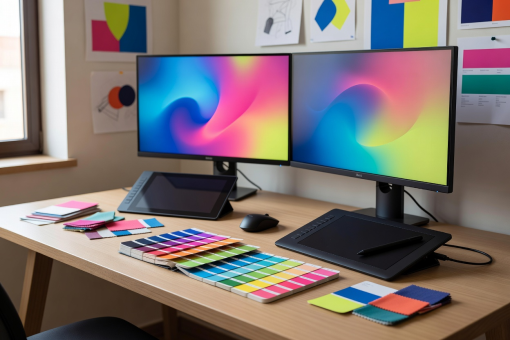
From Prompting to Iterative Art Direction
The early conversation surrounding generative media was dominated by singular, one-off text prompts that yielded surprising yet uncontrollable results. Today, the creative sector has moved decisively toward structured, multi-step workflows where artificial intelligence serves as a responsive visual sketchpad rather than an autonomous creator.
Platforms like Midjourney, Adobe Firefly, and Stable Diffusion architectures offer varying degrees of parameter control. While cloud-hosted commercial suites prioritize rapid concept generation with minimal technical barrier, open diffusion models permit localized control over depth maps, line art conditioning (ControlNet), and character consistency.

Audio Engineering and Voice Generation
Synthetic audio production has seen considerable refinement. Software like ElevenLabs and Descript allows creators to repair dialogue errors without booking studio rerecording sessions. A podcast host can correct a mispronounced guest name or patch an audio dropout directly by altering the written transcript.
However, voice cloning technologies bring acute ethical and regulatory obligations. Creators must confirm that synthetic vocal assets are deployed with explicit consent and clear disclosure to audiences. In music creation, generative rhythm and chord assistants serve well for beating creative block, but struggle to reproduce subtle human groove or idiosyncratic instrumental performance.

Video Production and Generative Sequences
Video generative models such as Runway Gen-2 and similar latent video diffusion frameworks have demonstrated remarkable cinematic textures, camera motion sweeps, and atmospheric lighting. Yet professional video editors quickly discover their limits when building continuous narrative sequences.
The primary hurdle remains temporal consistency: preserving exact costume details, facial anatomy, and environmental geometry across cuts. Consequently, commercial production houses predominantly rely on AI video tools for b-roll mood clips, abstract transitions, and storyboarding concepts before deploying practical cameras.

Intellectual Property & Legal Viability
Before integrating generative creative tools into client deliverables, studios must examine the training data lineage of each platform. Enterprise clients increasingly require indemnification against copyright infringement claims, rendering models trained on unvetted public scrapes legally precarious.
Platforms that train exclusively on public domain imagery, licensed stock libraries, or proprietary datasets provide legal shelter, though frequently with a narrower aesthetic vocabulary. Balancing commercial safety against raw generative versatility is the central dilemma facing contemporary design directors.
Next Step: Explore Academic & Research AI
Discover how researchers, analysts, and students use semantic discovery without falling victim to hallucinations.
Go to Research Tools Guide